
Hey there, fellow cake lovers! Today, I’m excited to dive into one of the most beloved treats out there—the Berliner Donut. Whether you call it a Berliner, a Krapfen, or a Jelly Donut, this sweet pastry has captured hearts—and stomachs—worldwide. If you’ve ever wondered what makes a Berliner special, or how to make one from scratch, you’re in the right place. Let’s explore everything about Berliner donuts—from their history and variations to tips for perfecting your recipe!
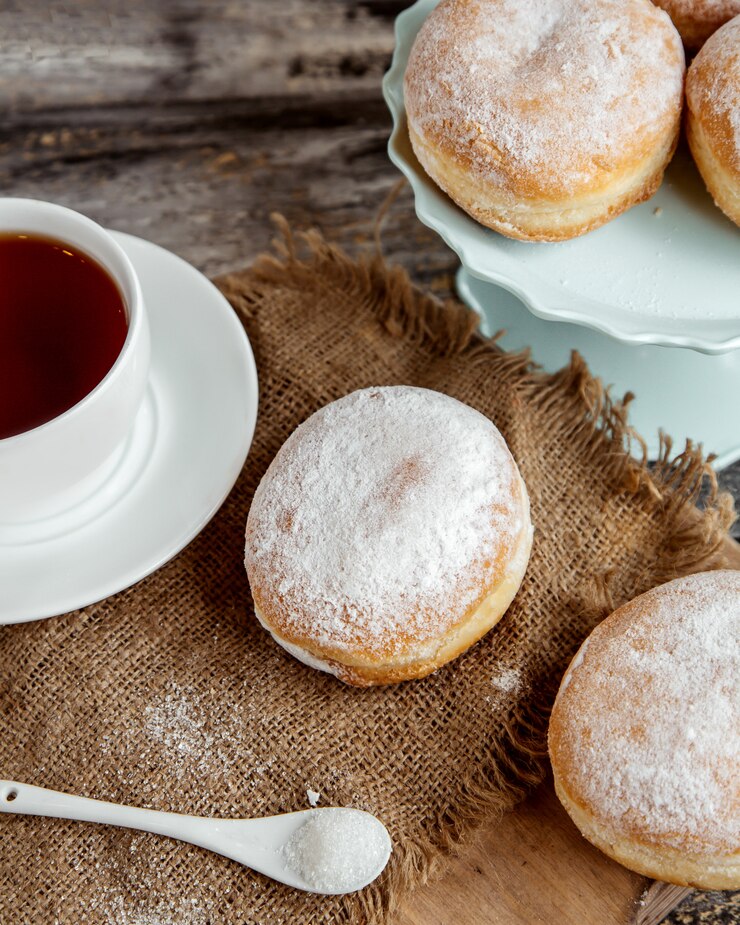
What Is a Berliner Donut? An In-Depth Look
First things first, let’s understand what exactly a Berliner donut is. Many people might think it’s just a fancy name for a regular jelly-filled donut, but there’s more to it!
Definition:
| Term | Explanation |
|---|---|
| Berliner Donut | A round, yeast-raised pastry filled with fruit jam or custard, typically coated with powdered sugar or icing. Known by various regional names like “Krapfen” in Germany, “Bismarck” in the US, and “Pfannkuchen” in some parts of Germany. |
Key Features of a Berliner:
- Light, airy, and fluffy texture from yeast fermentation
- Filled with fruit preserves, jelly, or custard—commonly raspberry or apricot
- Usually coated with powdered sugar, icing, or glaze
- Fried until golden brown on the outside
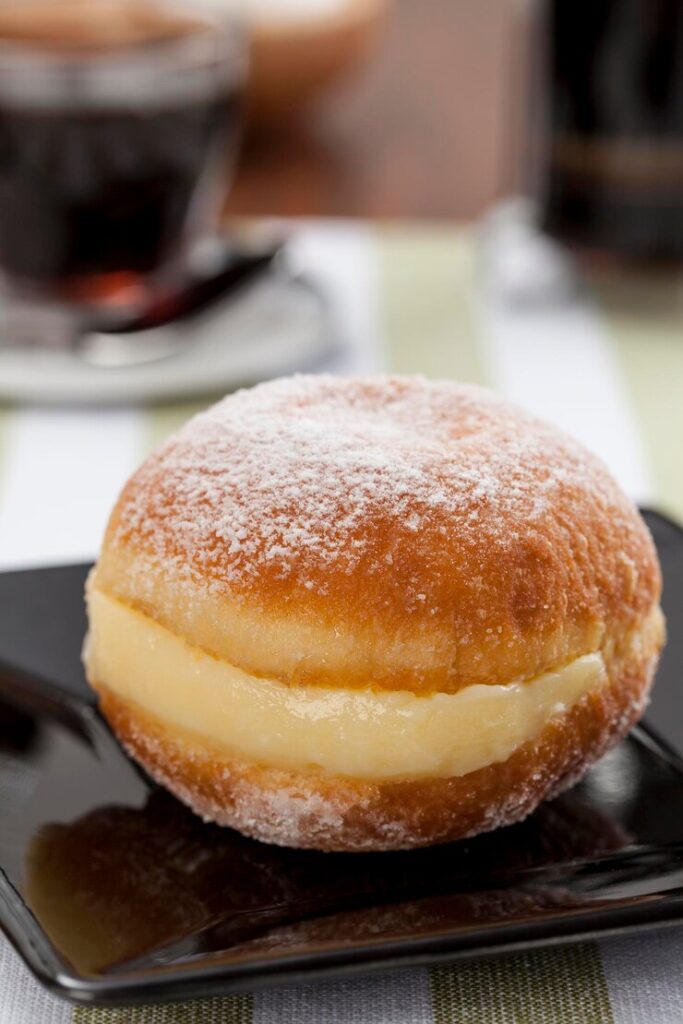
The Rich History and Cultural Significance
While the exact origins are debated, the Berliner donut has deep roots in German culinary history, dating back hundreds of years. They’re often enjoyed during celebrations, festivals, or just as a weekend treat. Interestingly, despite being associated with Germany, versions of the Berliner are popular in many countries, each adding their own twist.
In the United States, for example, “Bismarcks” are the go-to name, especially in diners and bakeries. Meanwhile, in Germany, they’re called “Berliner” or “Pfannkuchen,” depending on regional dialects.
Understanding this cultural background adds a layer of appreciation when baking or eating these delightful treats.
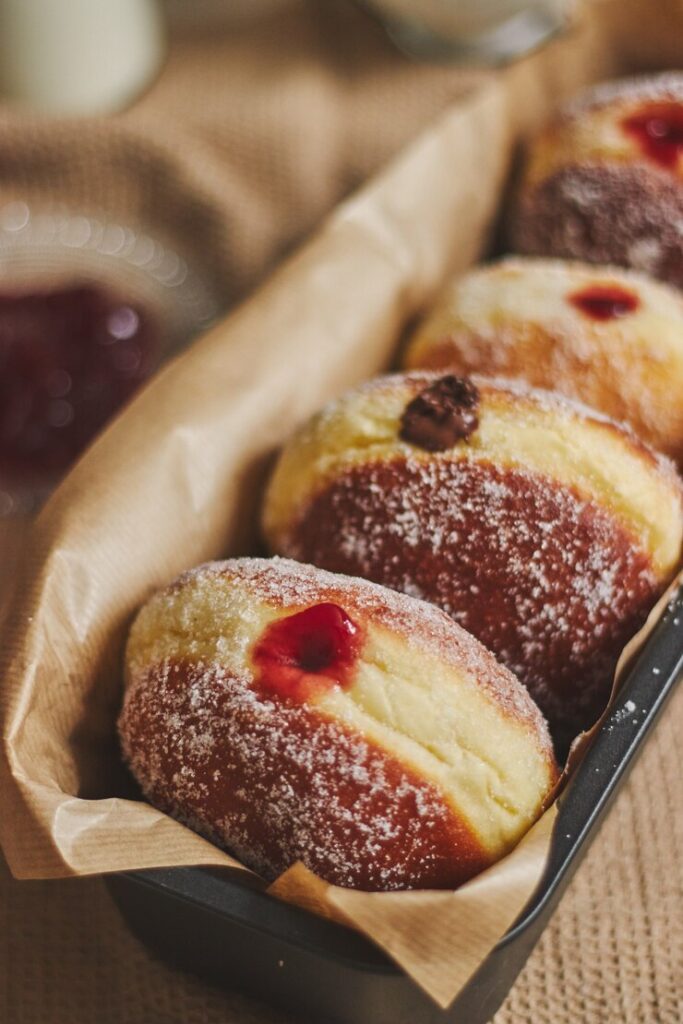
Materials Needed: Everything You Need to Make Perfect Berliner Donuts
Before jumping into the recipe, let’s gather all the ingredients and tools. Organizing these beforehand makes baking smoother.
Ingredients Table
| Item | Quantity/Specifications | Notes |
|---|---|---|
| Bread flour | 4 cups (480 grams) | Provides structure and fluffiness |
| Active dry yeast | 2 ½ teaspoons | Fresh yeast works too, adjust accordingly |
| Granulated sugar | ½ cup (100 grams) | For dough flavor and yeast activation |
| Whole milk | 1 cup (240 ml), warm | Slightly warmed to approx. 110°F (43°C) |
| Unsalted butter | 4 tablespoons (60 grams), melted | Adds richness and moisture |
| Eggs | 2 large | Helps leaven and improve texture |
| Salt | ½ teaspoon | Enhances flavor |
| Fruit jam or custard | ½ cup (for filling) | Raspberry, apricot, or custard of choice |
| Powdered sugar | For coating | Optional, but classic |
| Vegetable oil | For frying (~3 inches deep) | Neutral oil like canola or sunflower oil |

Equipment
- Stand mixer or mixing bowl
- Deep frying pan or heavy-bottomed pot
- Pastry bag with a filling nozzle
- Cooling rack
- Sharp knife or dough cutter
Step-by-Step: How to Make Delicious Berliner Donuts at Home
Ready to get your hands sticky? Here’s a simple yet detailed process to create your own Berliner donuts.
Step 1: Prepare the Yeast Mixture
- Warm the milk to about 110°F (43°C)—it should feel lukewarm, not hot.
- Dissolve 1 teaspoon of sugar and the yeast in the warm milk.
- Let sit for 5-10 minutes until frothy and bubbly. This shows the yeast is active.
Step 2: Mix the Dough
- In a large bowl or stand mixer, combine the flour, remaining sugar, and salt.
- Add the eggs, melted butter, and frothy yeast mixture.
- Mix on low speed or by hand until everything is incorporated, then knead for about 8-10 minutes until smooth and elastic.
Step 3: First Rise
- Cover the bowl with a damp cloth or plastic wrap.
- Let the dough rise in a warm, draft-free area for 1 to 2 hours, or until doubled in size.
Step 4: Shape the Donuts
- Punch down the dough gently.
- Roll it out onto a floured surface to about ¾ inch thickness.
- Use a round cutter (about 3 inches diameter) to cut out circles.
- If you want traditional Berliner shape, use a smaller cutter to punch out a center hole, or leave them full for filled donuts.
Step 5: Second Proof
- Place the shaped dough on a floured baking sheet.
- Cover and let rise for another 30-45 minutes, until puffed.
Step 6: Fry the Donuts
- Heat oil in a deep pot to 350°F (175°C).
- Carefully fry the donuts in batches, cooking each side for about 2-3 minutes or until golden brown.
- Use a slotted spoon to remove and drain on paper towels.
Step 7: Fill and Coat
- Once cooled slightly, use a piping bag to inject fruit jam or custard into each donut.
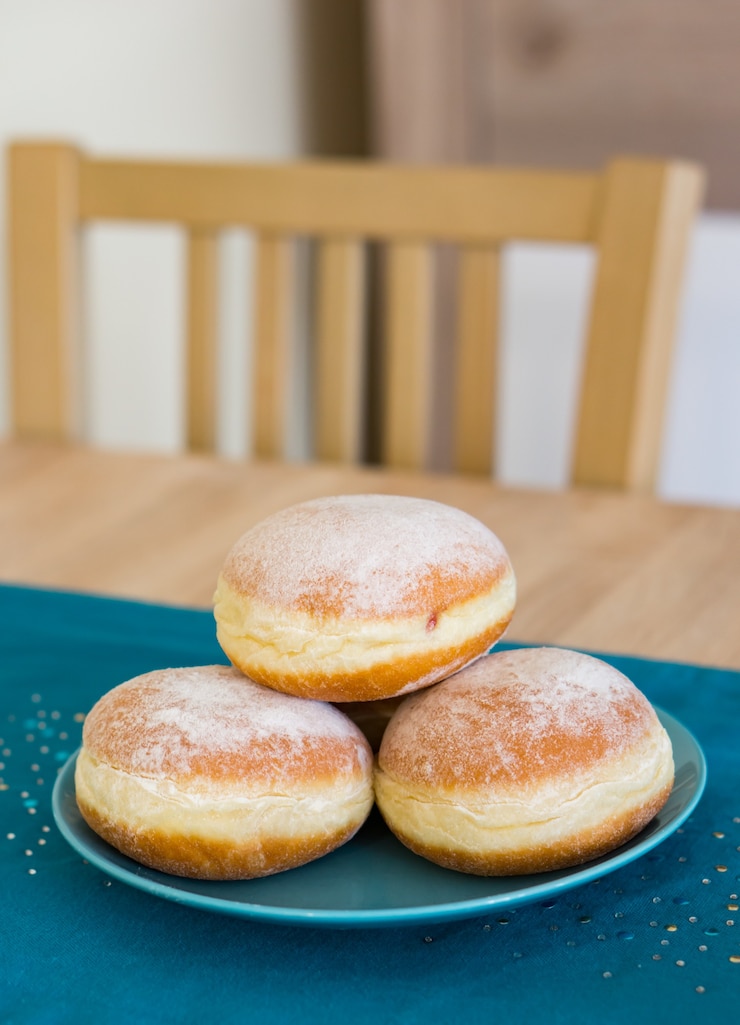
- Optional: Toss in powdered sugar or drizzle with icing for a finishing touch.
Tips for Success
- Temperature Control: Maintaining the oil at 350°F ensures the donuts cook evenly without burning.
- Dough Fermentation: Don’t rush the proofing stages; proper rising creates the light, airy texture.
- Filling Technique: Use a sturdy piping bag and a filling nozzle. Insert the tip into the side or bottom of the donut, then gently squeeze in the filling.
- Frying Safety: Always be cautious with hot oil—never leave unattended, and keep a lid nearby for emergencies.
Common Mistakes & How to Avoid Them
| Mistake | How to Prevent It |
|---|---|
| Overcrowding the fryer | Fry in small batches to maintain temperature and even cooking |
| Not proofing dough enough | Be patient; dough should double in size before frying |
| Filling too much jam or custard | Inject just enough to prevent leakage or bursting during frying |
| Using low-quality oil | Use fresh, neutral oil for crisp, tasty results |
| Not drying the donuts after frying | Drain on paper towels to keep them crispy and less greasy |
Variations to Try: Endless Delicious Possibilities
Looking to spice things up? Here are some fun variations you can experiment with:
- Chocolate-filled Berliner: Use chocolate ganache or Nutella.
- Cream cheese filling: A tangy twist perfect for brunch.
- Glazed Berliner: Dip in a shiny sugar glaze or chocolate coating.
- Different jams: Apricot, blueberry, or even exotic flavors like passionfruit.
- Vegan version: Swap eggs with flaxseed or applesauce, and use plant-based milk and margarine.
Final Words: Make Your Own Berliner Donuts Today!
There you have it—a complete guide to creating authentic, fluffy Berliner donuts in your own kitchen. Once you master the technique, you’ll find endless ways to customize and elevate this classic treat. It’s not just about satisfying a craving; it’s about enjoying the process and sharing delicious moments with friends and family.
So, next time you crave a sweet, fruity, melt-in-your-mouth donut, give this recipe a try. Remember, great baking is all about patience, attention to detail, and a dash of creativity. Happy baking!
And don’t forget—good ingredients, proper technique, and a little love are all you need to produce bakery-quality Berliner donuts at home.


